
 Content Writer: Janice Chew • Monday, 26/07/2026 - 19:17:26 - PM
South Korea’s casino industry is pushing back strongly against a proposal to raise the maximum tourism levy on foreigner-only casinos from 10% to 15% of revenue.
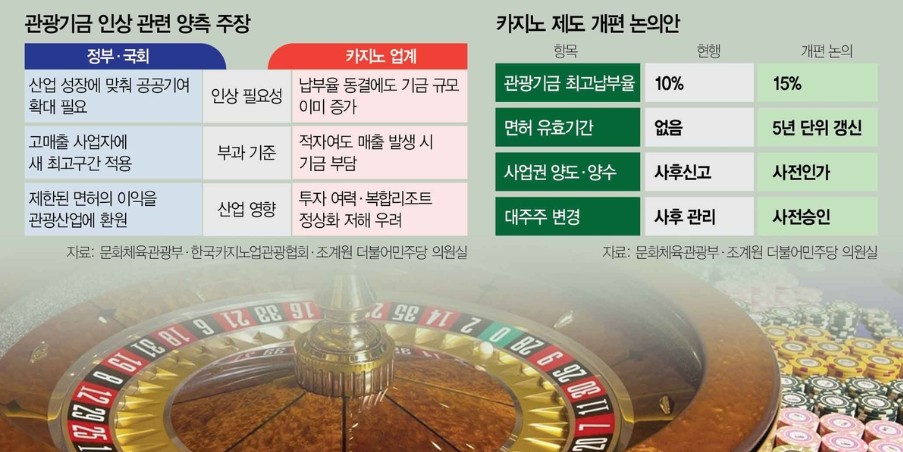
The Korea Casino Association has warned that the increase could accelerate bankruptcies among operators that are still recovering from the impact of COVID-19. Its main concern is simple: the levy is charged on revenue, not profit.
That means casinos may still have to pay even when they are operating at a loss.
Why the Industry Is Worried
The association argues that casinos already face multiple layers of cost, including individual consumption tax, corporate tax, local taxes and tourism fund contributions.
Adding a higher levy could reduce cash flow, weaken reinvestment and make it harder for operators to upgrade facilities, attract international visitors and compete with regional markets.
This matters because South Korea’s foreigner-only casino sector depends heavily on tourism demand. If operating costs rise too much, smaller or weaker operators may struggle to survive.
The Government’s View
The government’s argument is that the casino industry has grown significantly since the tourism fund contribution system was introduced decades ago.
From that perspective, a higher contribution may be seen as a way to ensure the industry contributes more fairly to tourism development.
However, the risk is balance.
If the levy becomes too heavy, it could reduce the industry’s ability to invest in hotels, entertainment, MICE facilities, technology, marketing and customer experience.
Regional Competition Is Getting Stronger
The timing is sensitive.
Japan is moving ahead with MGM Osaka, which is expected to open in 2030. Southeast Asian gaming and integrated resort markets are also competing aggressively for international tourists and premium players.

If Korea increases the cost burden while competitors are investing in new attractions and large-scale integrated resorts, Korean operators may lose market share.
Marketing and Technology Lesson
For casino operators, the answer cannot only be lobbying against tax increases.
They also need to prove their wider tourism value.
That means showing how casinos support hotels, restaurants, entertainment, local jobs, MICE events, international arrivals and regional economic activity.
From a technology perspective, operators should use better data systems to demonstrate customer impact, visitor behaviour, campaign return, responsible gaming controls and contribution to the tourism ecosystem.
Better data can help the industry make a stronger policy case.
Final Takeaway
South Korea’s casino levy debate is not just about tax.
It is about how the country wants to position its casino industry in the next decade.
A higher tourism levy may increase public revenue in the short term, but if it weakens investment and competitiveness, the long-term cost could be much higher.
For Korea to compete with Japan, Macau, Singapore and Southeast Asia, regulation must protect public interest while still allowing operators to invest, modernise and grow.