
 Content Writer: Janice Chew • Tuesday, 26/02/2026 - 00:38:28 - AM
In 2026, the global Integrated Resort (IR) industry isn’t just observing Singapore — it’s recalibrating against it.
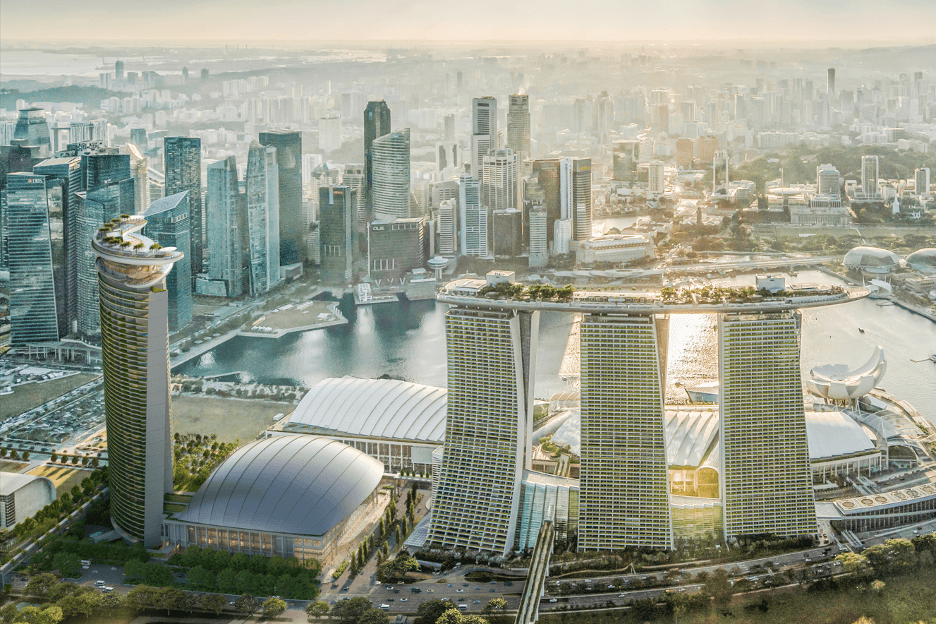
The expansion of Marina Bay Sands — widely referred to as “MBS 2.0” — is not a conventional capacity increase. It is a deliberate, capital-intensive repositioning of the IR model toward ultra-premium yield, experiential dominance, and long-term regulatory alignment.
At an estimated US$8–10 billion investment, this is one of the most significant reinvestment commitments in global gaming history.
This is not about scale.
This is about raising the standard.
From Volume to Yield: The Ultra-Luxury Pivot
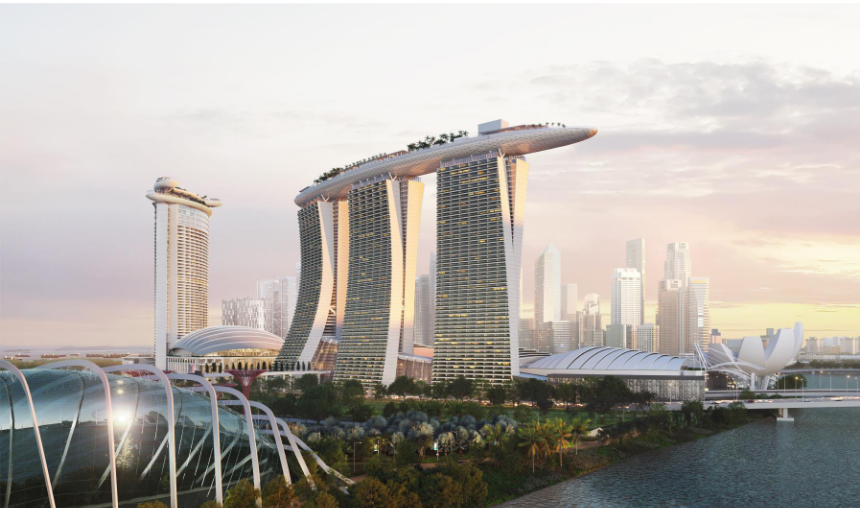
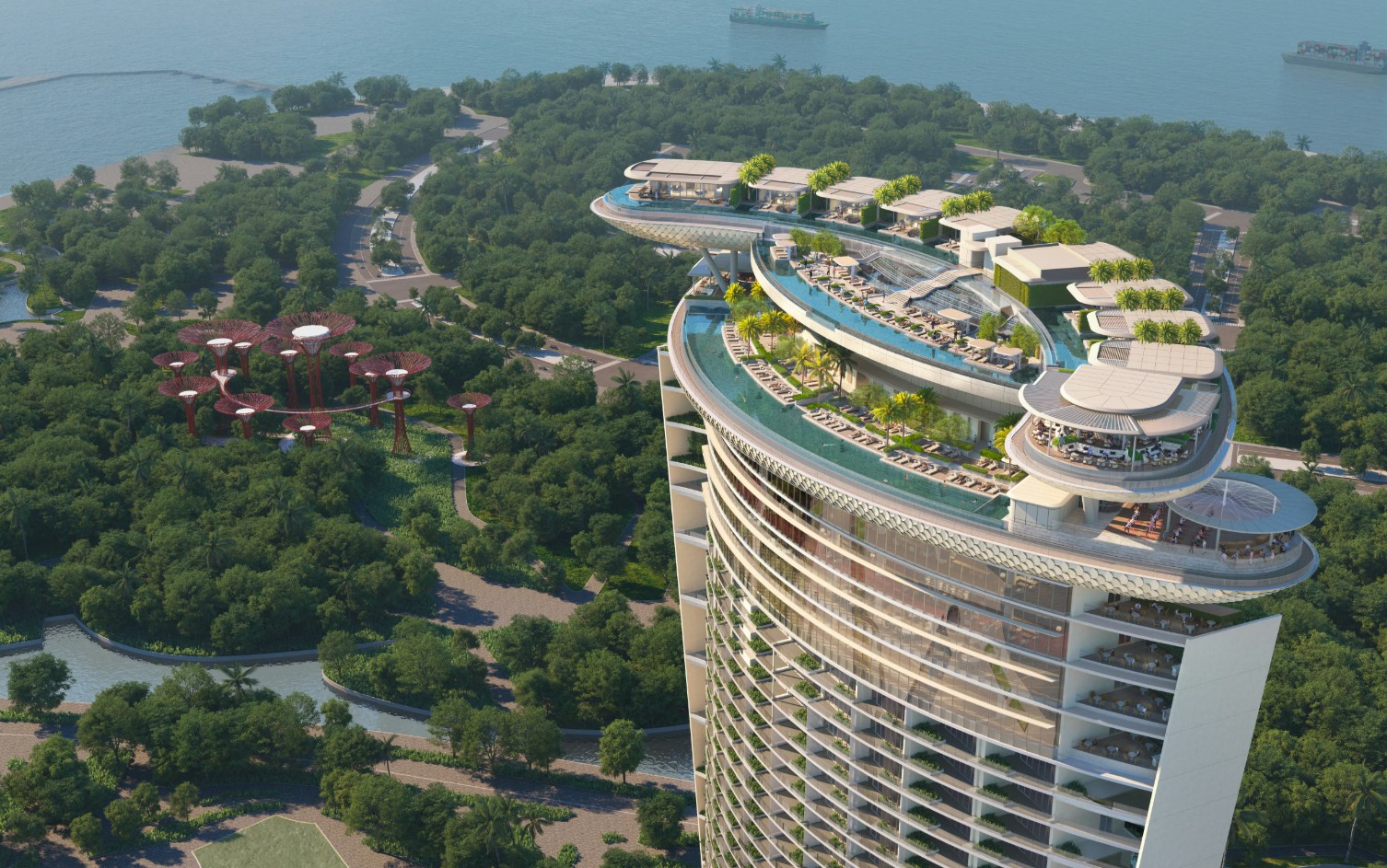
The new 55-storey tower, designed by Safdie Architects, is rotated 45 degrees to optimize skyline exposure and panoramic views of the Singapore Strait — a subtle but symbolic move emphasizing positioning and visual dominance.
But the real story lies inside.
-
570 all-suite rooms
-
23 ultra-exclusive “Mansion” sky residences
-
A fully separated luxury sanctuary distinct from the original towers
This is not tourism expansion.
It is yield optimization.
Singapore’s IR model has never depended on junket volume or mass visitation spikes. Instead, it thrives on:
-
High ADR (Average Daily Rate)
-
Premium mass gaming margins
-
High per-capita visitor spend
-
Strong non-gaming revenue integration
MBS 2.0 doubles down on that formula.
The strategic thesis is clear:
In a constrained-supply, high-regulation market, the future belongs to ultra-high-value guests, not incremental footfall.
The Arena Strategy: Controlling Premium Event Flow
The 15,000-seat state-of-the-art arena — designed by Populous — may prove to be the most strategically powerful component of the expansion.
Why?
Because modern IR ecosystems are no longer gaming-centric alone. They are event-driven demand engines.
A world-class arena delivers:
-
Global touring acts
-
Premium corporate conferences
-
Destination-based entertainment tourism
-
Year-round high-value foot traffic
-
Cross-property conversion into gaming and luxury retail
Las Vegas perfected this integration decades ago.
Singapore is institutionalizing it within a tightly regulated, high-yield duopoly structure.
This isn’t about becoming “Asia’s entertainment capital.”
It’s about controlling premium event flow inside a vertically integrated ecosystem.
The Skyloop: The Next Global Icon
The original Infinity Pool defined luxury travel in the 2010s.
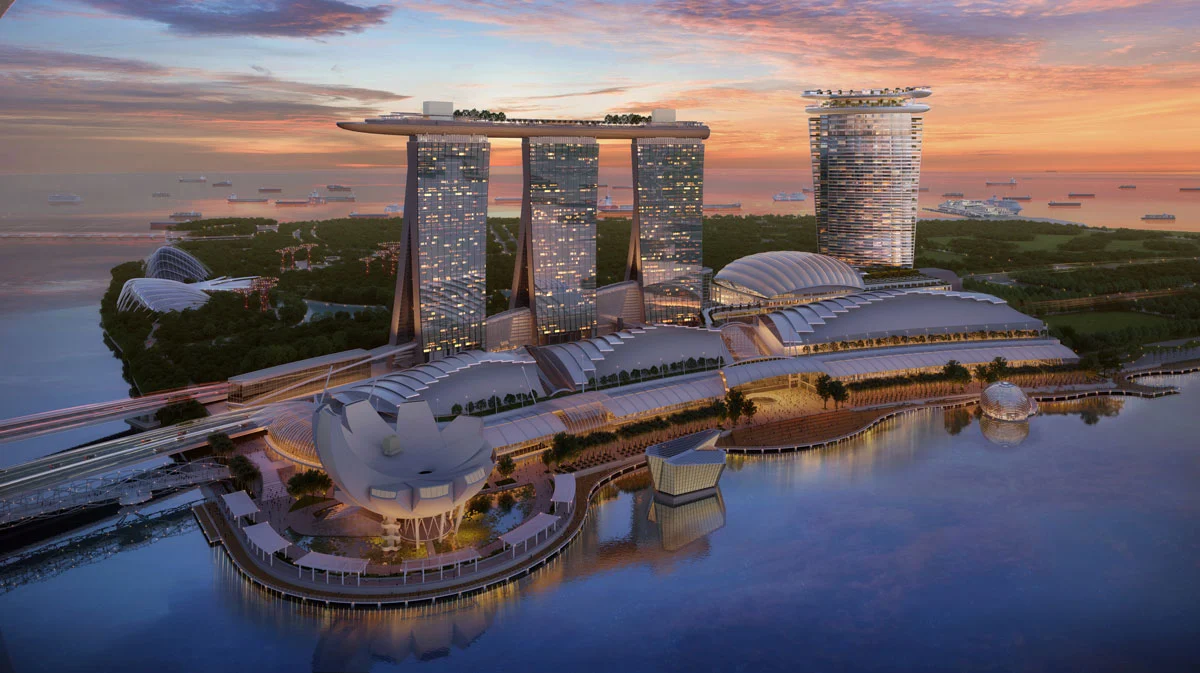
The proposed 76,000 sq. ft. multi-level “Skyloop” aims to define the 2030s.
Boomerang-shaped and spiraling in opposing directions, the Skyloop is positioned as:
-
A high-altitude lifestyle venue
-
A private event platform
-
A wellness-integrated space
-
A global social media magnet
But strategically, it serves a deeper purpose.
It reinforces the shift from “gaming destination” to “holistic lifestyle ecosystem.”
Gaming remains the financial engine.
But the branding architecture increasingly emphasizes:
-
Wellness
-
Arts
-
Cultural events
-
Ultra-premium experiences
This is narrative evolution — not operational abandonment of gaming.
Why This Matters Globally
MBS 2.0 raises the competitive threshold for:
-
Macau premium mass reinvestment cycles
-
Las Vegas luxury refresh strategies
-
Japan’s upcoming IR developments
-
Korea’s foreigner-only casinos
-
Emerging Southeast Asian IR ambitions
However, replication is not straightforward.
Singapore’s model benefits from:
-
A tightly controlled duopoly
-
Long-term license security
-
Regulatory clarity
-
Limited supply growth
-
Strong governance discipline
Most jurisdictions lack this structural stability.
That’s why MBS 2.0 isn’t just an expansion — it is a signal:
The Integrated Resort model is maturing from expansion-driven growth to capital-efficient ultra-premium optimization.
The 2026 Verdict
MBS 2.0 is a multi-billion-dollar statement of intent.
It demonstrates that the next decade of IR development will be defined by:
-
Ultra-luxury positioning
-
Experiential differentiation
-
Event-driven integration
-
Yield maximization over volume growth
-
Long-term reinvestment discipline
For the global IR industry, the message is clear:
The benchmark has moved.
And the gap between world-class and average just widened.